Wednesday, 12 August 2020

NDW100 - DNF - 78 miles - 20:00:12

NDW 100

DNF with a time of 20:00:12 after 78 miles.

Lessons learnt from this race were:

1) Drink.  There was no checkpoint 1 due to Covid so the first available checkpoint was at the 15 mile mark.  Tested this during training and I needed 1.5L.  At the 10 mile mark I knew I would have run out by the time I got to the checkpoint so alternating with drink one mile and no drink the next until I got to the checkpoint.  From then on it was about 10 miles to each checkpoint so having 1.0L of litre would have been sufficient had it not been for the heat. 

2) Food.  I was wasn't eating enough.  I had energy gels, snack bars and sweets which worked in training.  However, doing a maximum of 30 miles to testing was different to the NDW100.  I should have eaten 60-90g carbs per hour but instead I was eating half that amount.  Moving forward will also need to add more variety to my food.  Would also need to add some sandwiches to the mix to soak up the gels.

3) Lacked judgement to change the strategy.  I decided to go for a sub 21 hour finish.  The heat conditions totally passed me by and stuck to the 21 hour pace.  This then went pear shaped come the 40 mile mark when I was starting to feel sick.  I then decided to change strategy and stick to a sub 24 hour finish. In hindsight I should have stuck to the sub 24 hour finish from the start given the conditions. 

4) Kit.  Tested my kit during training but could have been better.  I knew it was going to be hot but I still went with my traditional black leggings.
I should have switched to some short leggings.  The long leggings also gave me some chaffing because I was carrying some gels in the pockets but this wasn't an issue during training.  My legionnaires hat stopped me from having a suntan but it heated up my head.  During the checkpoints I soaked my hat and took it off when  my head started to warm up again.  My Raidlight Revolutiv 24L didn't really cut the mustard.  It tears easily, taking items out of the bag is annoying with the bungee cords and just won't last.  I'll try a different rucksack for my next 100 miler

5).  Unhelpful comments by the Centurion volunteers.  Probably best if I keep my opinions to myself on this one like what the Centurion volunteers should have done.  I've done four NDW100's in a row.  After spending an hour in a bush at the side of a lane puking my guts up I knew a sub 24 hour finish was out of the question.  That was goal - not doing a 20 mile death march just to please someone else's objectives.  

Despite these lessons this was actually my best NDW100 in five attempts.  I was on target for a sub 21 hour finish until I had stomach issues.  Sort that out and a sub 24 hour finish for the NDW100 is in sight. 


Centurion One Up Challenge - 20/07/20 - 11'145 ft - 17 hrs 59 mins - 108 miles

To see how many feet I could climb in one week ... British Three Peaks achieved.

Wednesday, 20 May 2020

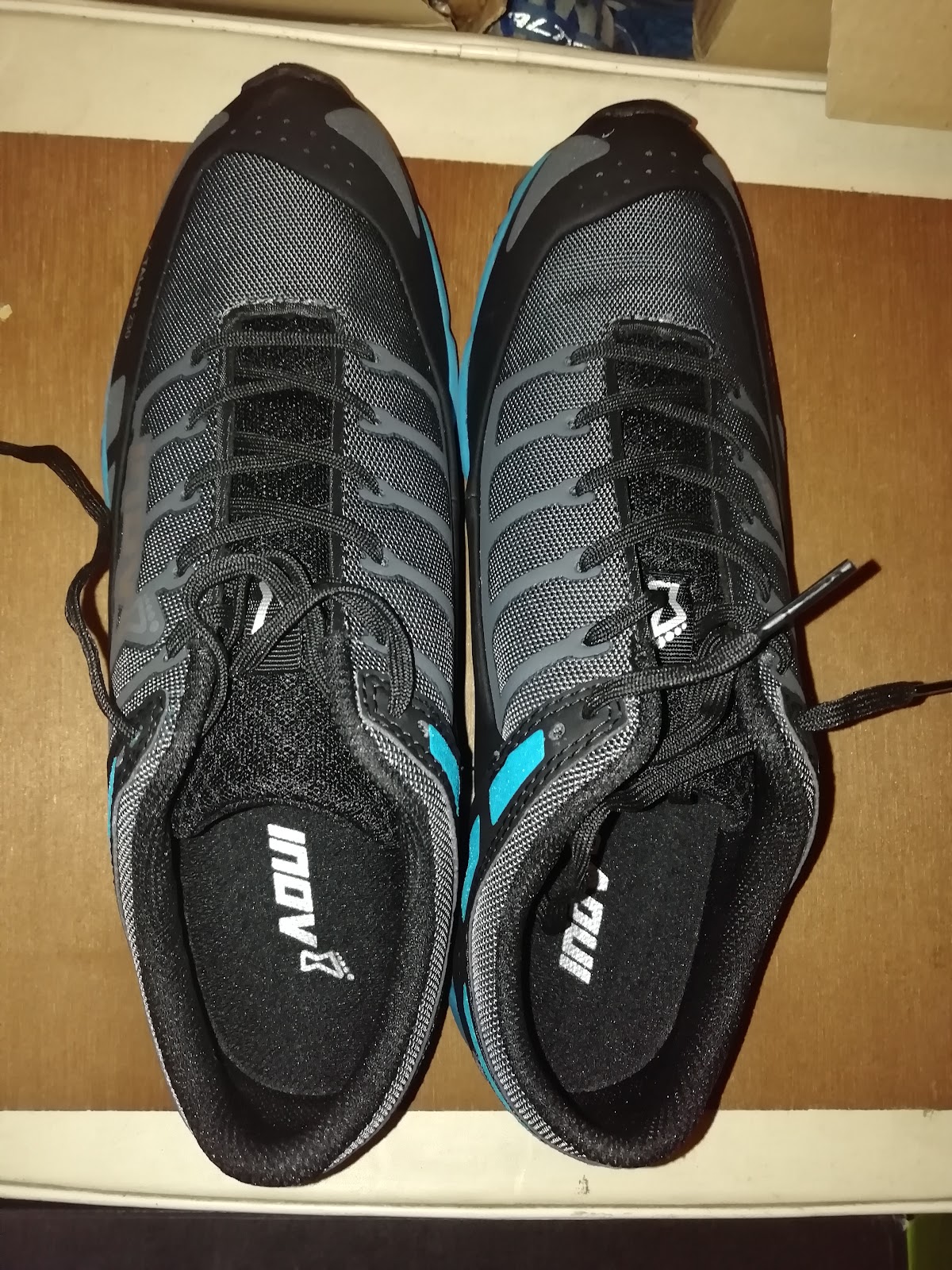
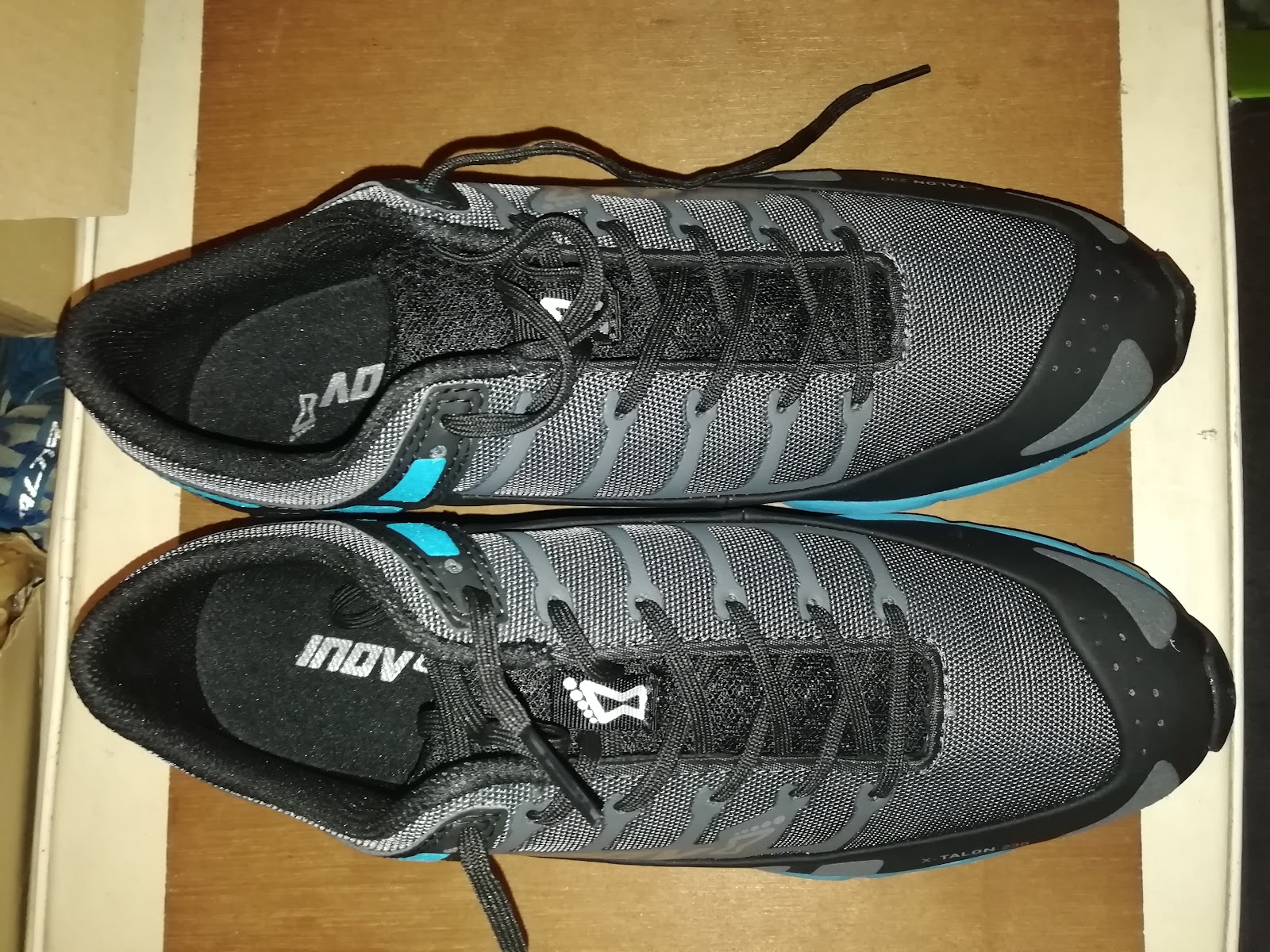
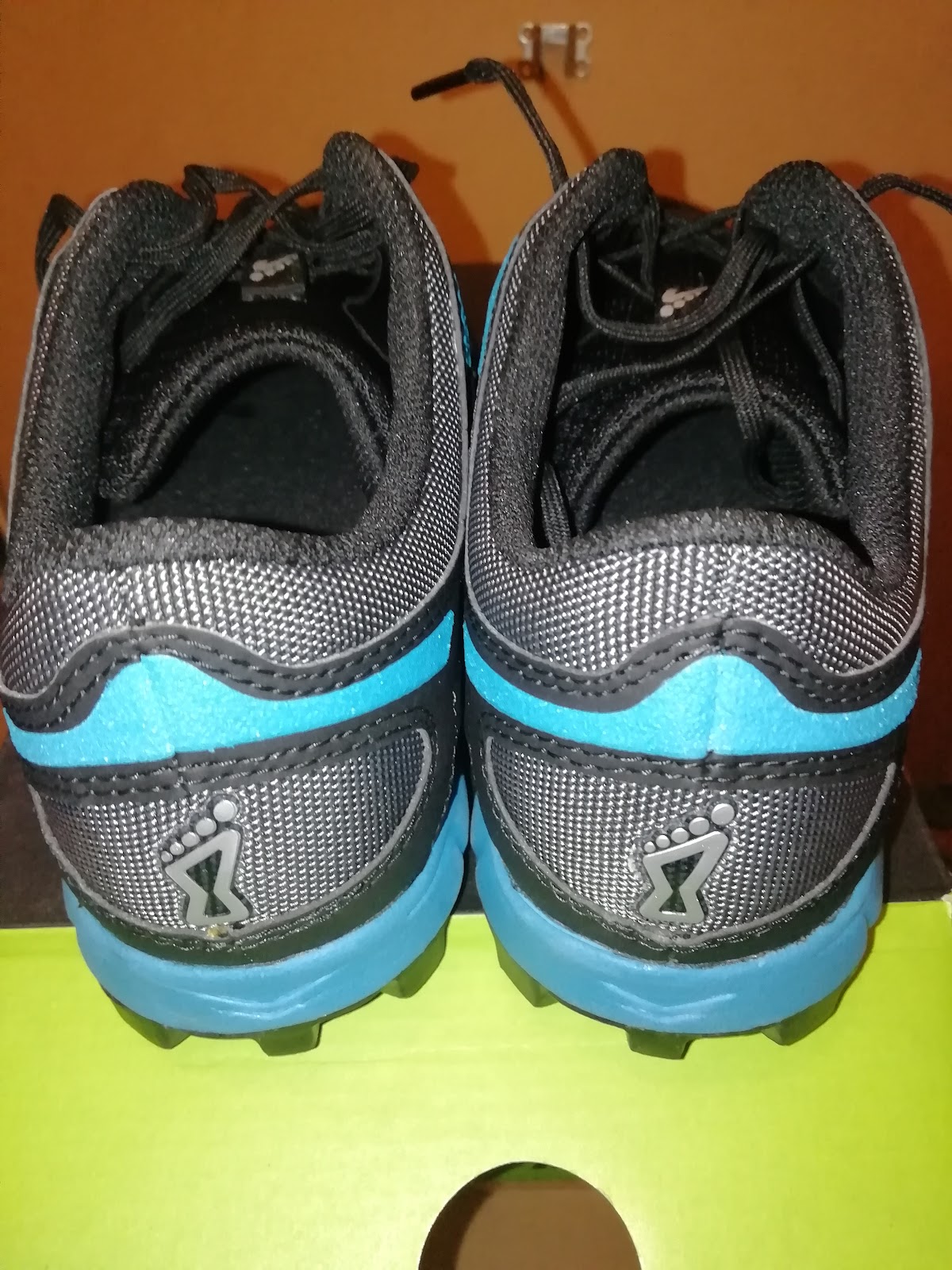
Inov-8 X-Talon Review

INOV-8 X-TALON 230 REVIEW 


SPECIFICATIONS:

Make: Inov-8
Model: X-Talon 230
Fit: Standard Fit
Pronation: Neutral 
Size: 8.5 (UK); 9.5 (US); 42.5 (EURO)
Colours: Black/Red; Grey/Blue 
Weight: 230 grams 

DESIGN AND APPEARANCE

The Inov-8 have put these trail shoes as a fit scale of 1.  Inov-8 has a scale of 1 to 5. 1 is a narrow fit and 5 is a wide toe fit.  This means that since a scale fit is 1 there is minimal internal movement which is what you'd require running on trails.  However, the downside is that since your feet spread when running longer distances there is little room for your feet to spread.  In essence there was no wide toe box and I suffered from rubbing on my little toe on my right foot. I would recommend not running more than a half marathon distance in these shoes, unless you opt for a one size larger.  


HEEL-TO-TOE-DROP

The heel to toe drop is 6mm.  The 6mm drop is calculated as the heel height outsole of 13mm minus the forefoot of 7mm.  

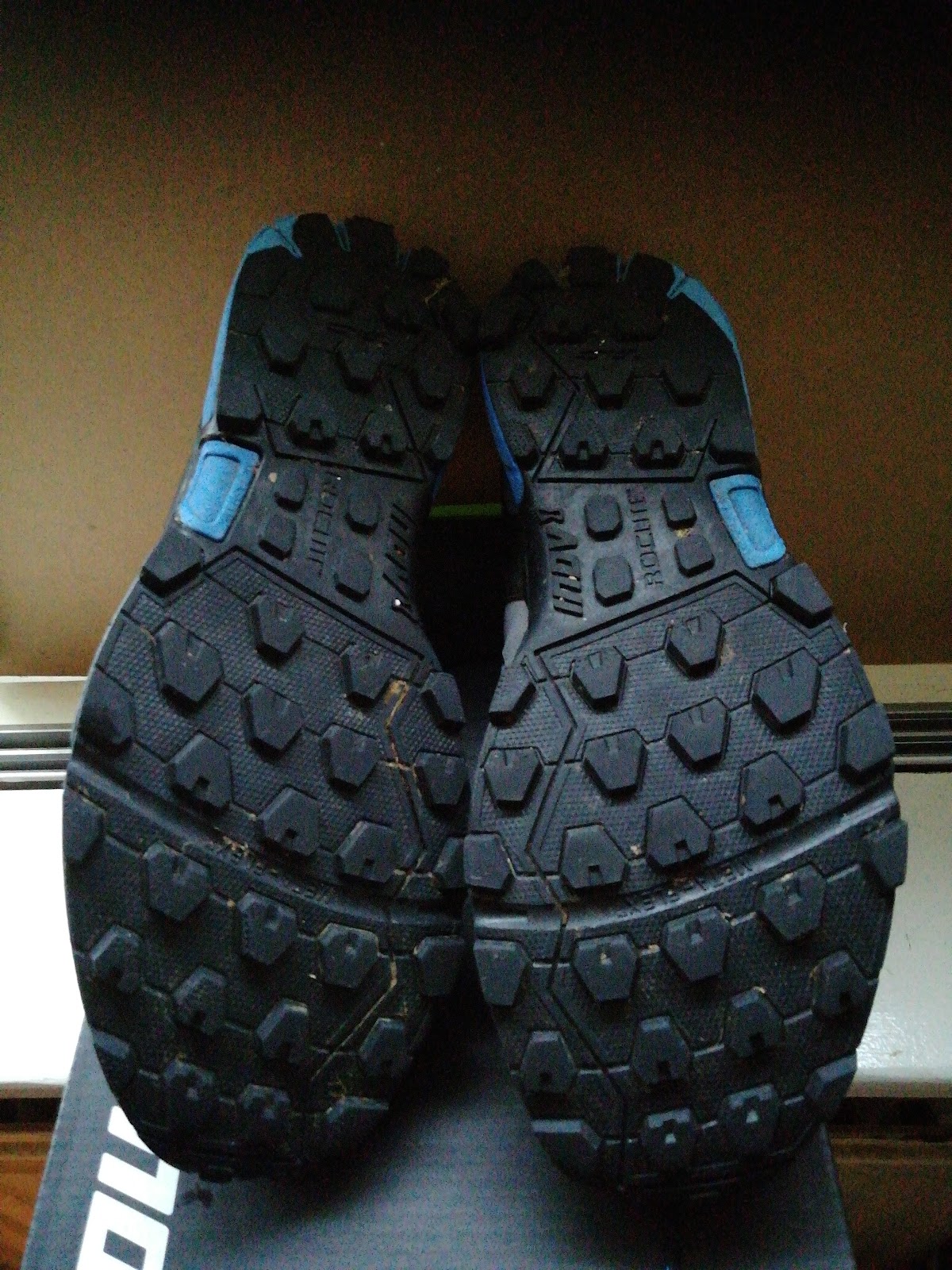
As I have a supinator gait (one where the outside of the heel strikes the ground first) I'm trying not to have a heel strike where the wear pattern is neutral.  This would make the trainers last longer. This would increase running efficiency and speed and make you less prone to injuries particularly in the knees and hips.  I experienced a wear pattern on the outer side of the sole, but this was more to the fact that I have a supinator gait. 

Inov-8 claims that because the midsole has a 6mm drop there is a 10 percent better shock absorption.  I don't know whether I could agree with 10 percent but there is certainly some absorption when jogging.  

The downside is that the absorption is at the heel and not at the forefoot.  If your gait is a midfoot or forefoot you can increase your cadence as you can push off once striking the ground.  For me, I'm trying to have a forefoot or midfoot strike pattern to increase my cadence. There's probably some scientific reason why not but I'd like to see more cushioning at the forefoot. 

Inov-8 also claims that because of the 6mm drop there is a 15 percent better energy return.  This is also due to the lightweight and flexible rockplate design. This supposedly gives underfoot protection.  I'm not convinced as jogging long distances certainly felt the impact on my forefoot, particularly the metatarsals.  Especially when striking numerous stones.  


GRIP

The Roclite 275 has hexagonal lugs with a lug depth of 8mm , one mm more than the Roclite 275.  

I didn't notice better grip when comparing the X-Talon 230 to the grip on the Roclite 275. The former has the sticky grip compared to the Meta-Flex Graphene grip on the Roclite 275.    

The lugs are smaller in diameter when compared to the Roclite 275. On the Roclite 275 they are 20mm x 15mm at their longest longest length.  In comparison, the lug diameter on the X-Talon are 12mm x 10mm. More grip surface area means more grip on wet, muddy trails.  


HARD-WEARING UPPER 

They are certainly not waterproof (although they don't claim to be).  I did experience wet feet dashing through puddles and the like at the forefoot but certainly not at the heel.

The design does not have a wide toe box so I did experience rubbing on my right small toe.  The size was one size larger than I would normally accommodate so I would have thought my feet had even more room to spread.  

PROS:

  • Lightweight
  • Comfort
  • Value for money
  • Cushioning and responsiveness

CONS:

  • Loud noise when running after high mileage

Overall rating:

  • 80 out of 100   

https://runrepeat.com/inov-8-x-talon-230


Sunday, 15 March 2020

Inov-8 Roclite 275 Review

Inov-8 Roclite 275: From the North Downs Way 100 (NDW100) to the Ultra-Trail Mont Blanc (UTMB) …

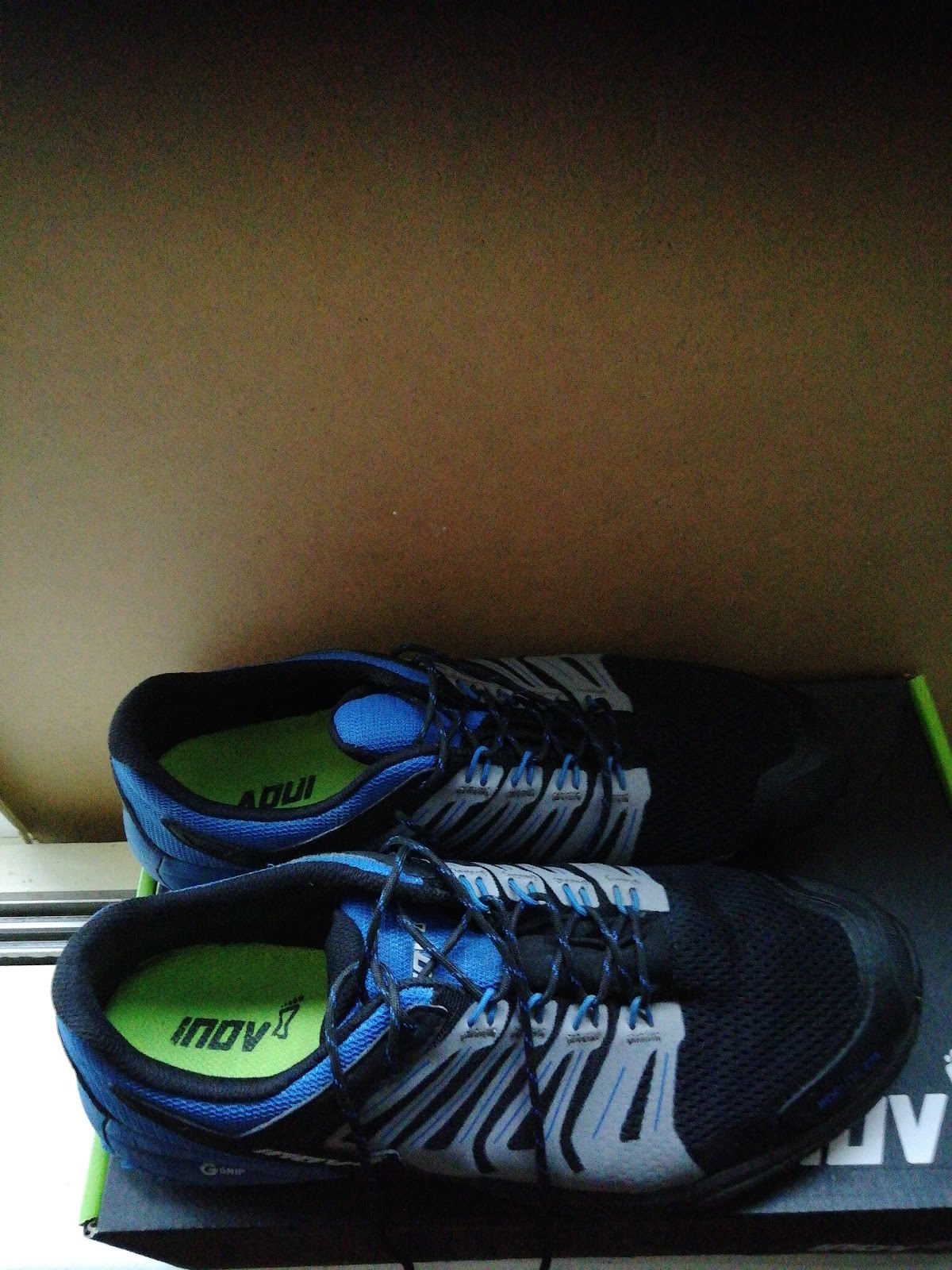
Front view 

I bought three of these pairs for the NDW100, the UTMB and for general jogging all this year.  The market price from Inov-8 was initially £130 per pair but with a 30% discount this was reduced to £91 per pair.  Nowadays, you can get them a little bit cheaper in a sale. Nevertheless £91 is what you would expect to pay for a good quality trail running shoe.  

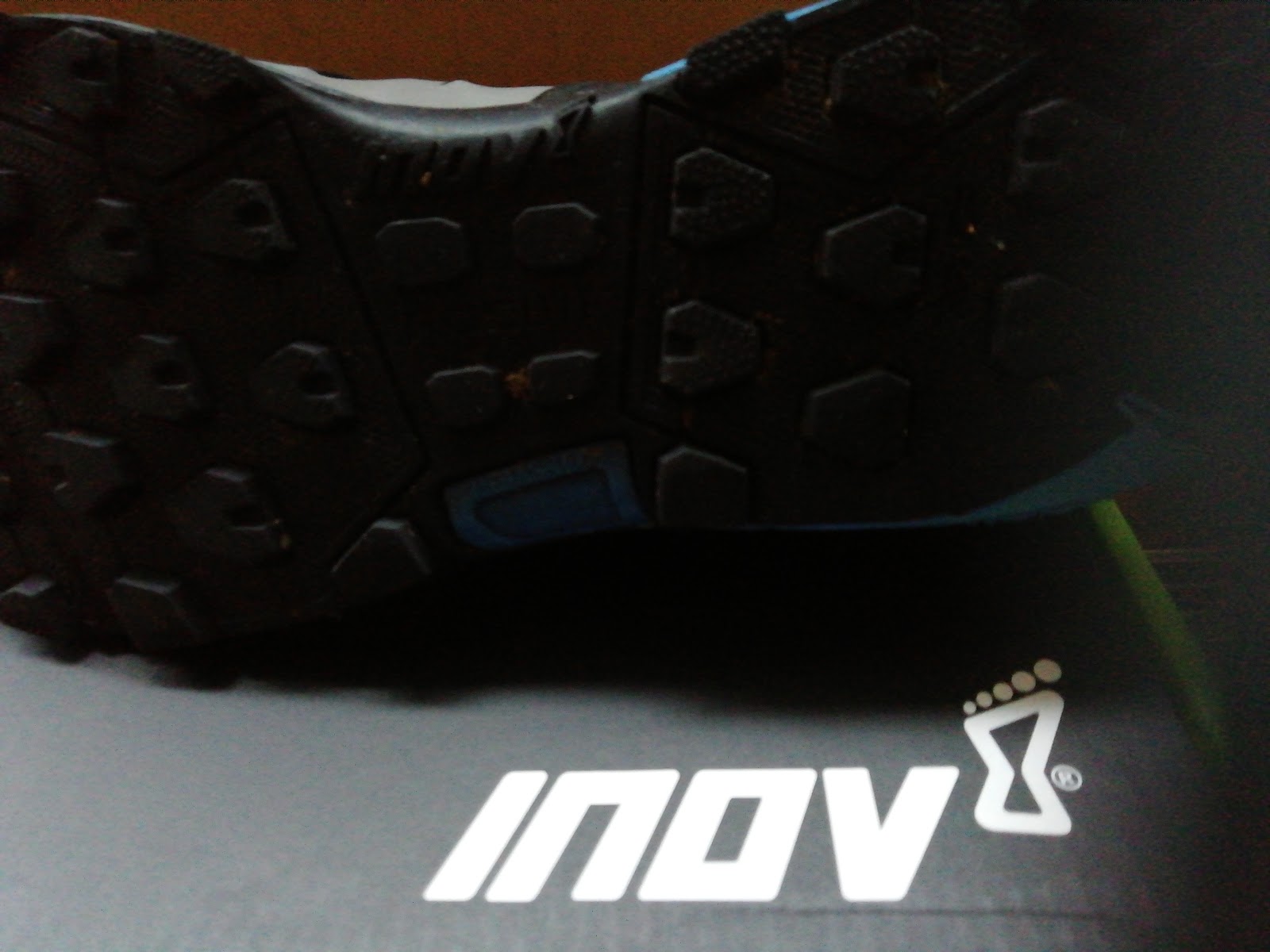
Grip 

After completing JOGLE in April 2019 with the Altra Torin 3.5 Mesh Running Shoe (See the review here - Shannice can you add in a link to the review once it's being approved …) I was glad to be back jogging on trails rather than on asphalt.   

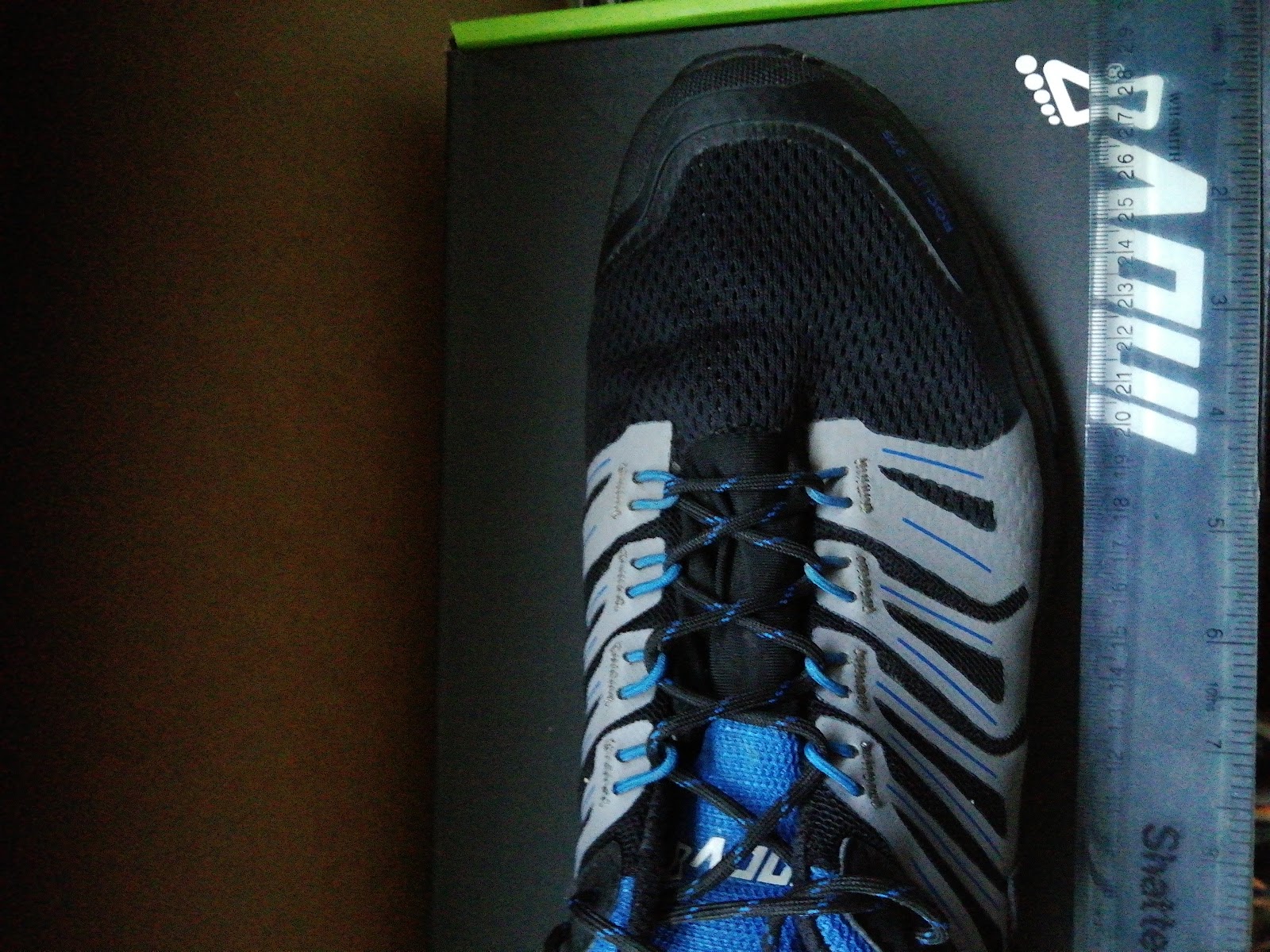
Top view 

Here is my review:

SPECIFICATIONS:

Make: Inov-8
Model: Roclite 275
Fit: Standard Fit
Pronation: Neutral 
Size: 9 (UK); 10 (US); 43 (EURO)
Colours: Black/Blue; Black/Yellow; Red/Black
Weight: 275 grams 

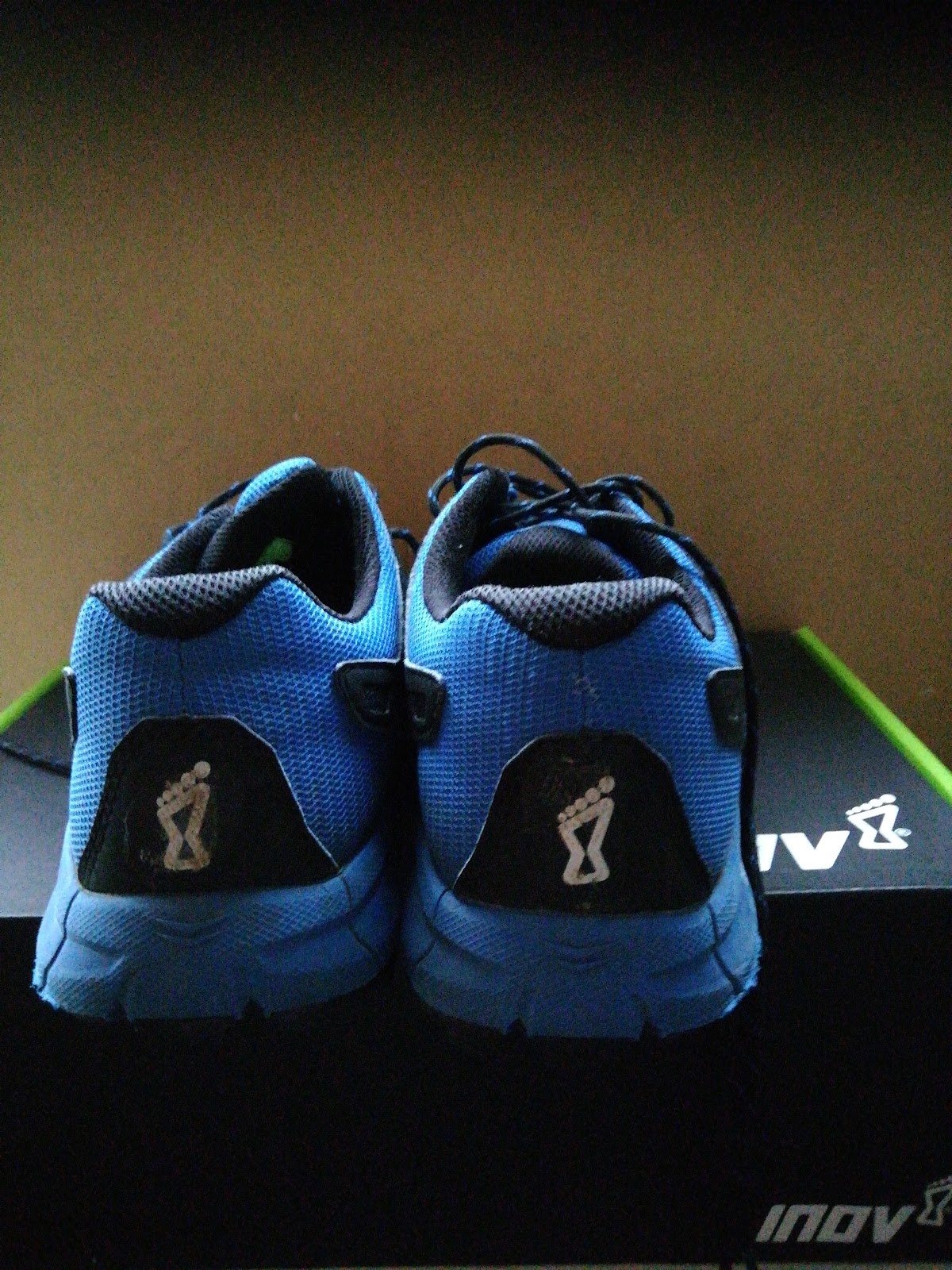
Rear view 

HEEL-TO-DROP

The heel to toe drop is 16mm as per the Brooks calculation but using Inov-8 different calculation is 8mm.  The 16mm drop is calculated as the midsole being 20mm plus the heel height outsole of 28mm which equals 48mm.  The midsole is 20mm plus the forefront height outsole of 12mm which equals 32mm. The heel height of 48mm minus the forefront height of 32mm equals a heel-to toe-drop of 16mm.  A larger heal drop would mean this encourages a heel strike.

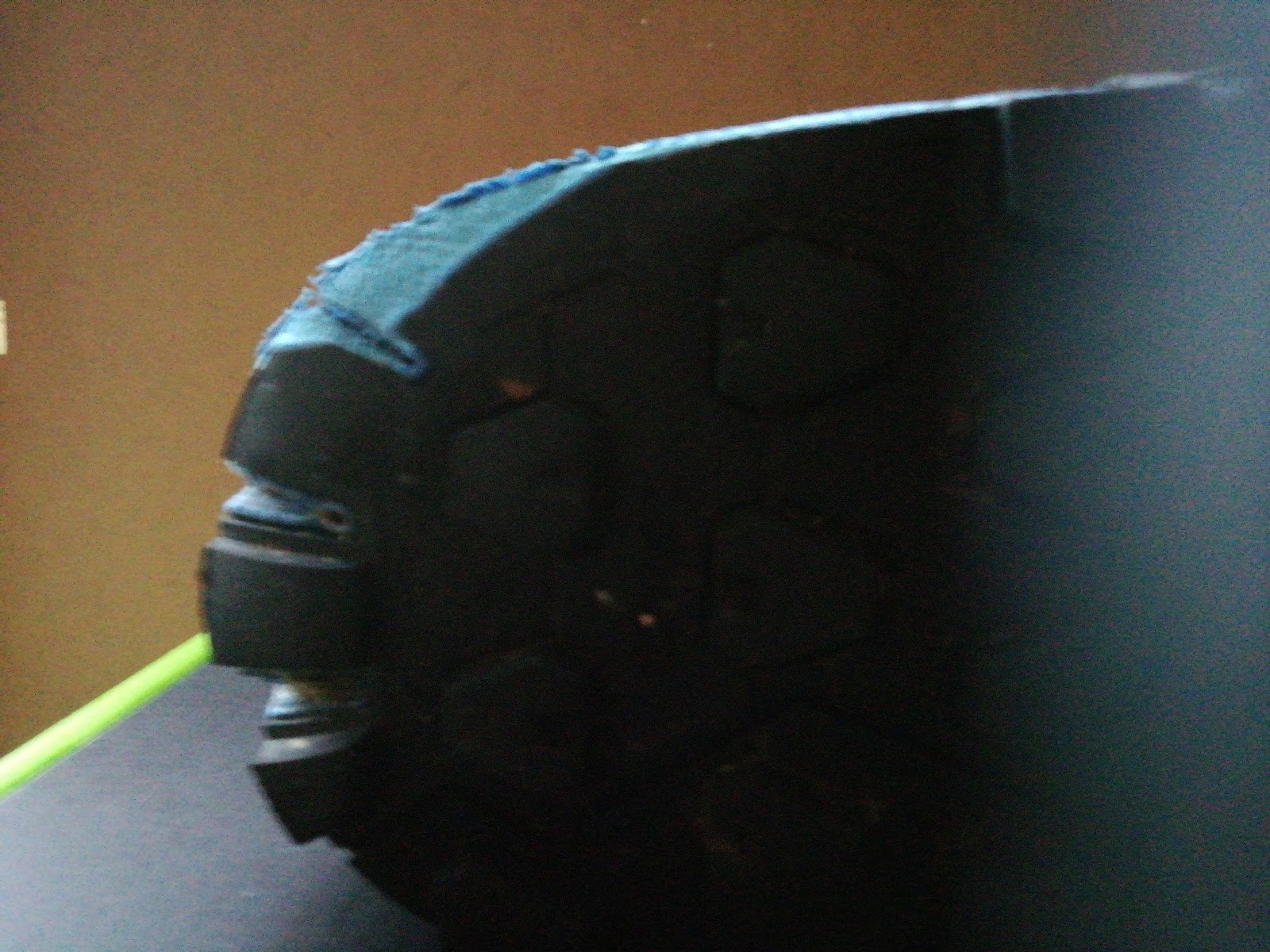
Inov-8 Roclite 8mm drop 

As I have a supinator gait (one where the outside of the heel strikes the ground first) I'm trying not to have a heel strike where the wear pattern is neutral.  This would make the trainers last longer. This would increase running efficiency and speed and make you less prone to injuries particularly in the knees and hips.  I experienced a wear pattern on the outer side of the sole, but this was more to the fact that I have a supinator gait. 

Supinator gait left the studs worn out on the right trail shoe on the outside

Inov-8 claim that because the midsole has a 8mm drop there is a 10 percent better shock absorption.  I don't know whether I could agree with 10 percent but there is certainly some absorption when jogging.  

Inov-8 Roclite 275 shock absorption with Graphene symbol

The downside is that the absorption is at the heel and not at the forefoot.  If your gait is a midfoot or forefoot you can increase your cadence as you can push off once striking the ground.  For me, I'm trying to have a forefoot or midfoot strike pattern to increase my cadence. There's probably some scientific reason why not but I'd like to see more cushioning at the forefoot. 

Inov-8 also claim that because of the 8mm drop there is a 15 percent better energy return.  This is also due to the lightweight and flexible rockplate design. This supposedly gives underfoot protection.  I'm not convinced as jogging long distances, like the NDW100, I certainly felt the impact on my forefoot, particularly the metatarsals.  Especially when striking numerous stones.  

The rockplate design in the middle of the Roclite 275


GRIP

Although I could compare the grip to different makes and models I'm just going to keep this in-house by comparing the grip on the Inov-8 Roclite 275 to the grip of the Inov-8 Terraclaw 250.  

Here is the link to the Terraclaw 250 review:
https://runrepeat.com/inov-8-terraclaw-250#expert-calvin-hemmings

The Roclite 275 has hexagonal studs compared to the triangular stud shapes of the Terraclaw 250.  

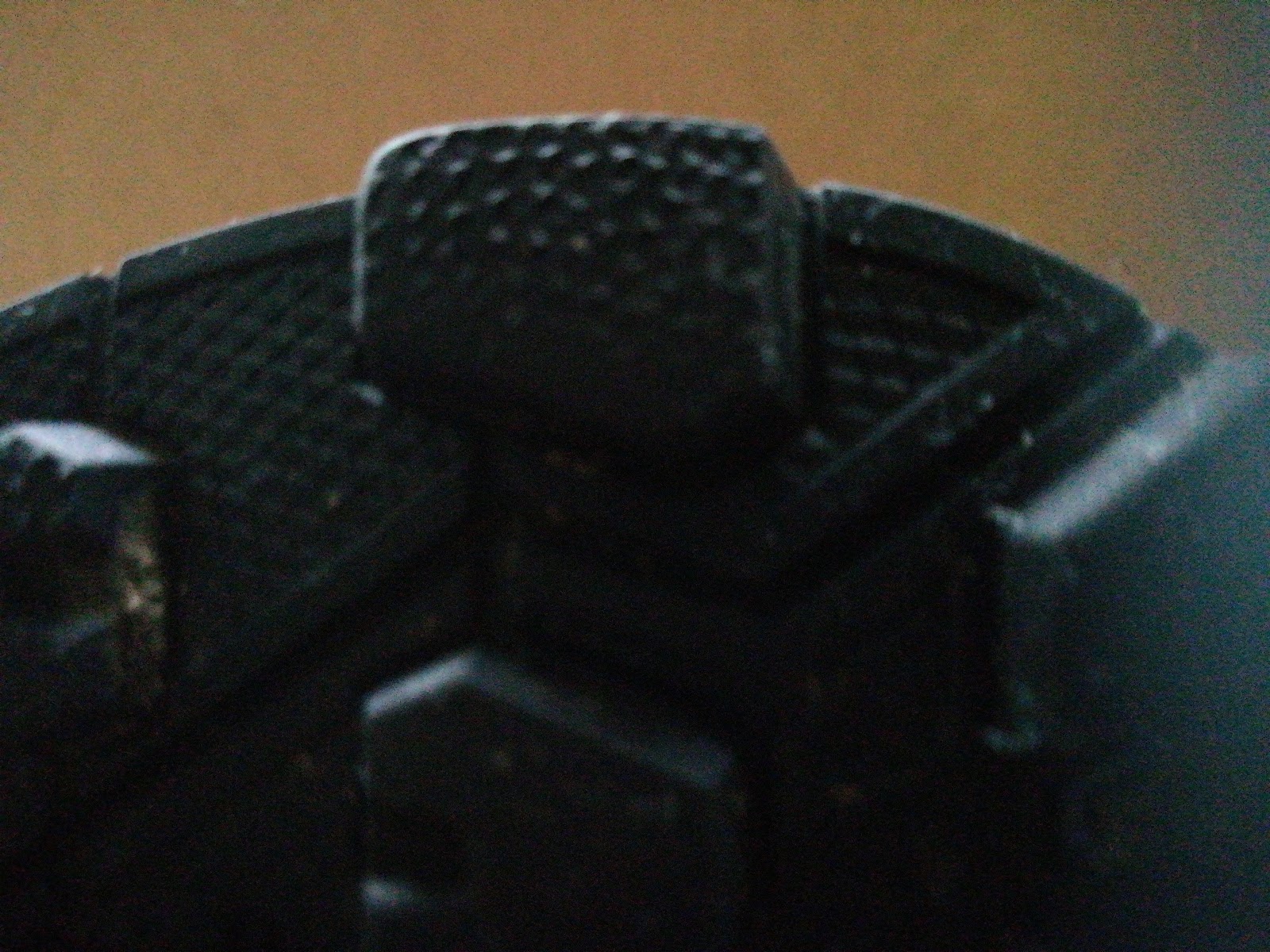
The hexagonal Roclite 275 studs with the dimples still in tact

For a number of reasons the grip on the Roclite 275 is better than the Terraclaw 250.  The former has the Meta-Flex Graphene grip compared to the Dynamic Fascia Band found in the Terraclaw 250.  

Secondly, the studs on the Roclite have a height of 7mm whilst on the Terraclaw 250 it is only 5mm.  Two millimetres does not sound much, but it does mean the grip will last longer before being worn down.  

Thirdly, the studs are bigger in diameter.  On the Roclite 275 they are 20mm x 15mm at their longest longest length.  In comparison, the stud diameter on the Terraclaw 250 are 13mm x 10mm. More grip surface area means more grip on wet, muddy trails.  

Lastly, the Roclite 275 studs (unlike the Terraclaw 250) have little dimples.  However, after a long run (12 miles) this has been worn down. I would have preferred if these dimples could have been implemented throughout the whole of the height of the stud and not just on its surface. 

Imagine the scene.  Your walking up hill with no trail just wet and muddy grass which has turned to slush.  Your not relying on trekking poles for extra grip but just your Roclite 275. They got me up the hill without trekking poles and without losing my footing.  Just like what happened on numerous occasions at UTMB.  

HARD-WEARING UPPER 

They are certainly not waterproof (although they don't claim to be).  I did experience wet feet dashing through puddles and the like at the forefoot but certainly not at the heel.  Imagine the scene - you've trodden through a deep puddle. Your front feet are soaked. Once you've recovered onto a dry patch you certainly can feel the water disperse out of the trail shoe making your feet drier. 

No wide toe box but hard wearing upper

The design does not have a wide toe box so I did experience rubbing on my right small toe.  The size was one size larger than I would normally accommodate so I would have thought my feet had even more room to spread.  

Rubbing on the right foot small toe 

PROS:

  • Lightweight
  • Comfort
  • Value for money
  • Cushioning and responsiveness

CONS:

  • Loud noise when running after high mileage

Overall rating:

  • 80 out of 100  

RunRepeat
https://runrepeat.com/inov-8-roclite-275


Altra Torin 3.5 Mesh Running Shoe Review


Altra Torin 3.5 Mesh Running Shoe: From John O'Groats to Lands End …

Having completed John O'Groats to Land's End (JOGLE) in 21 days in 2018 one of the reasons why I struggled was because I was wearing a Inov-8 Terraclaw 250 - a trail shoe.  (See the review here - Shannice can you add in a link to the review once it's being approved …)  

Personally, I prefer trail shoes rather than wearing a running shoe just because of the zero drop.  However, in 2019 I attempted JOGLE again with this time opting for a running shoe with a zero drop and Altra are on the best running shoes.  I was recommended the Altra Torin 3.5 Mesh Running Shoe by a fellow Ultra runner.  

Here is my review:

SPECIFICATIONS:

Make: Altra
Model: Torin 3.5 Mesh 
Fit: Standard Fit
Pronation: Neutral 
Size: 7.5 (UK); 8.5 (US); 42 (EURO)
Colours: Blue; White 
Weight: 220 grams 

The Altra Torin provides three key areas:
The Foot Shape, Zero-Drop and Comfort/Durability …

THE FOOT SHAPE:

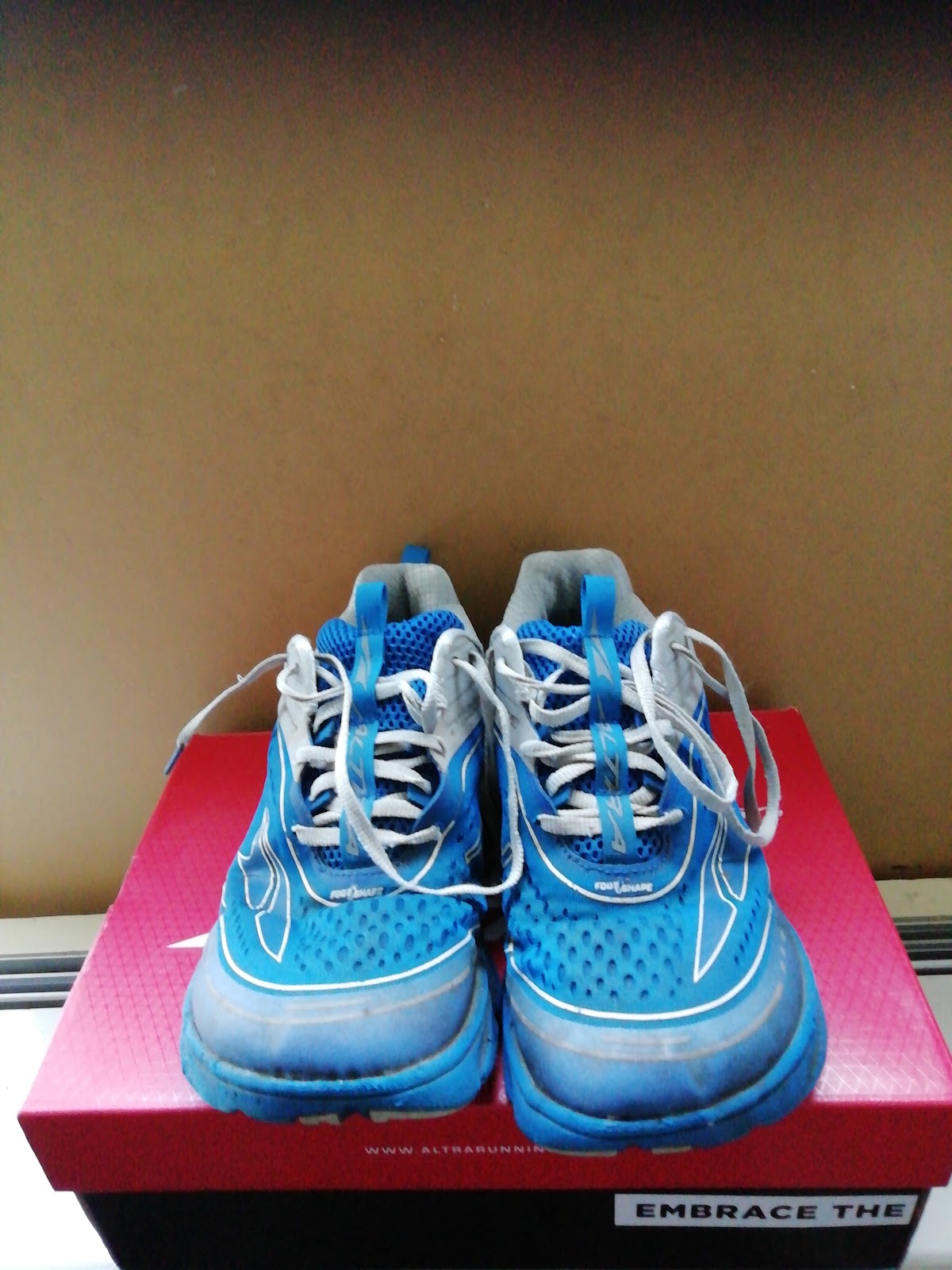
When you run your feet expand rather than staying in the same position when you walk.   Traditional running shoes feature pointy toe boxes that squeeze the toes out of their natural position.  Altra's Footshape toe box allows the toes to relax and spread out naturally and the big toe to remain in a straight position.  This reduces over-pronation, enhances stability and creates a powerful toe-off to maximize running performance.  

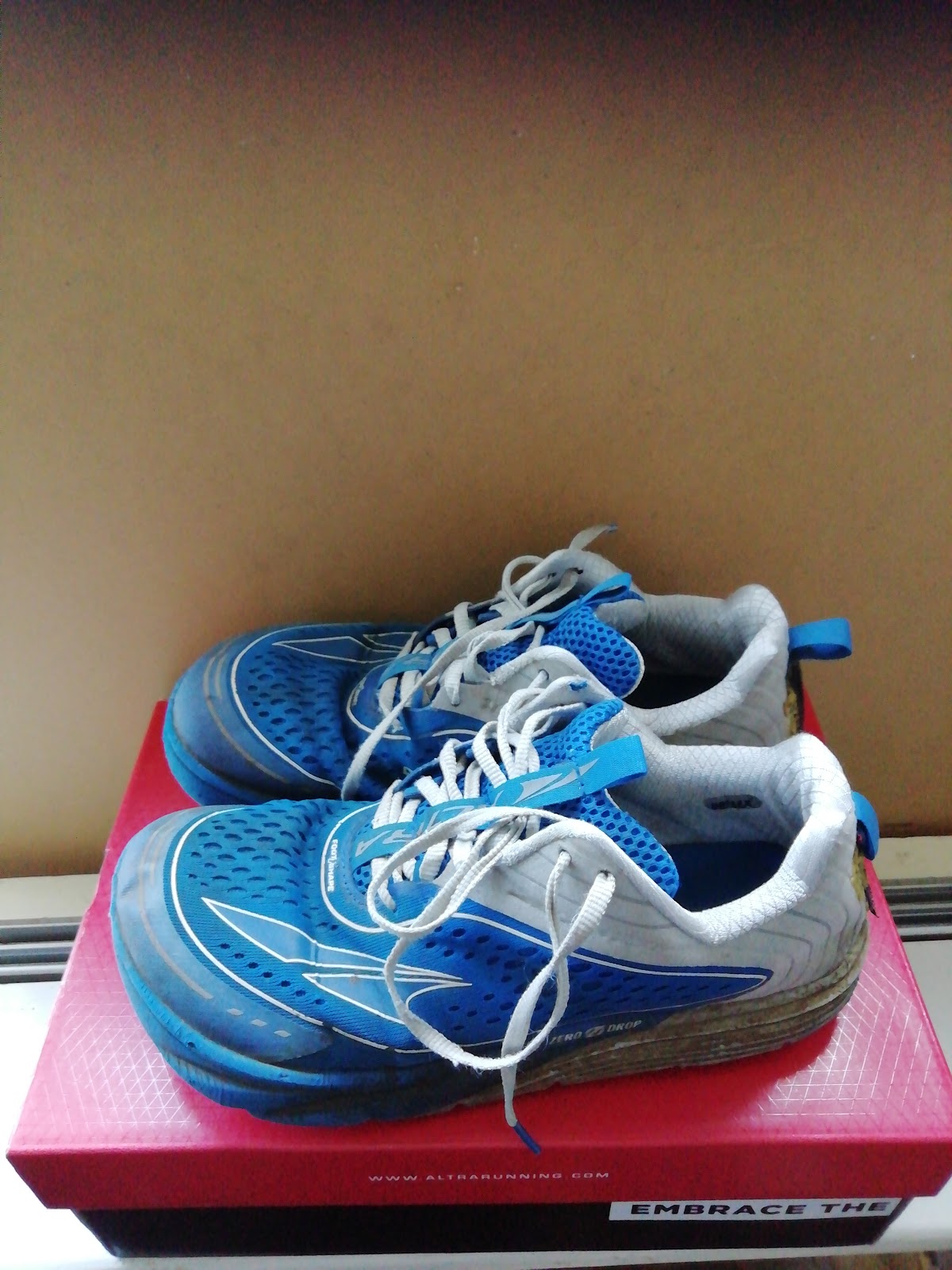
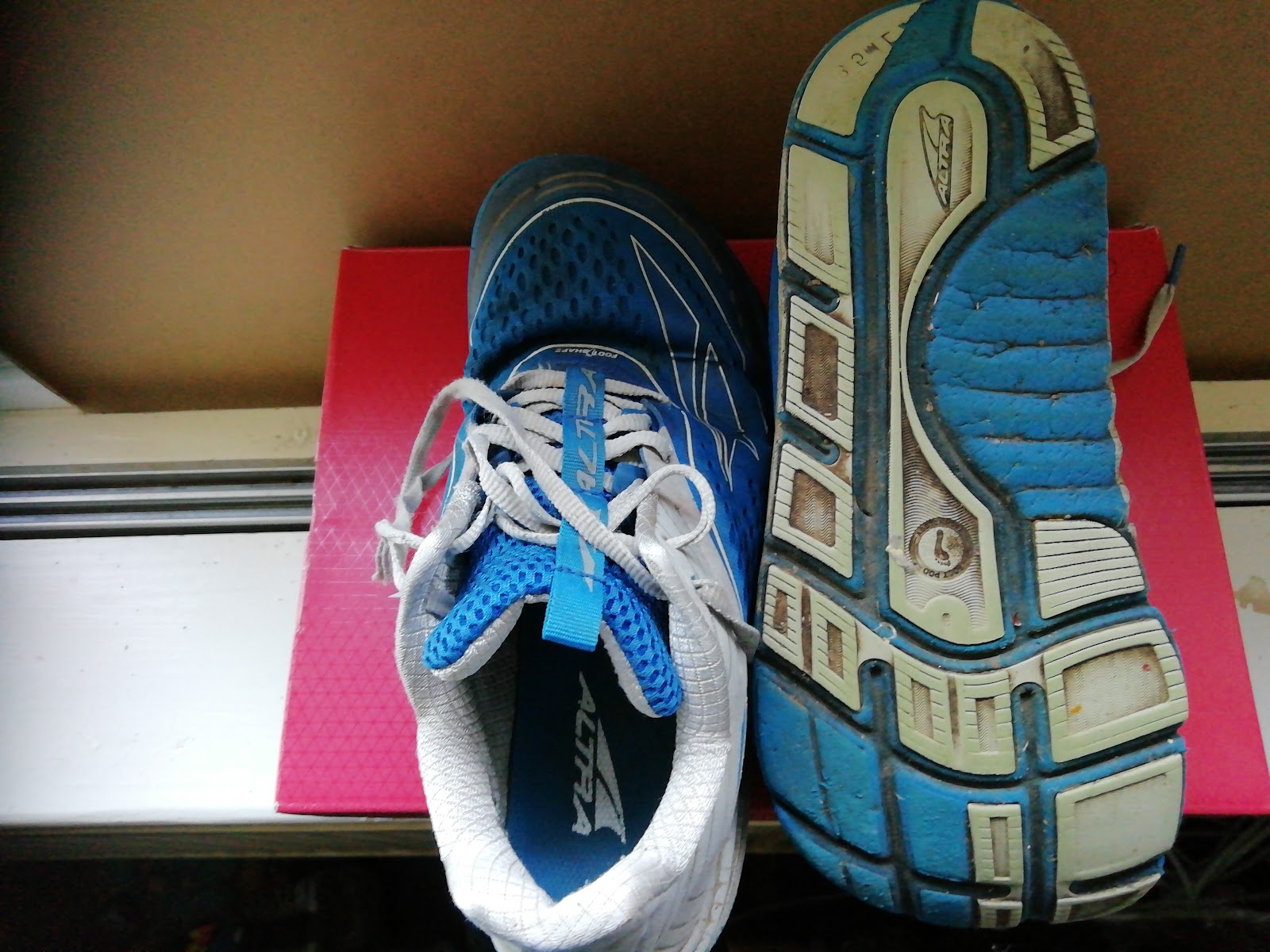
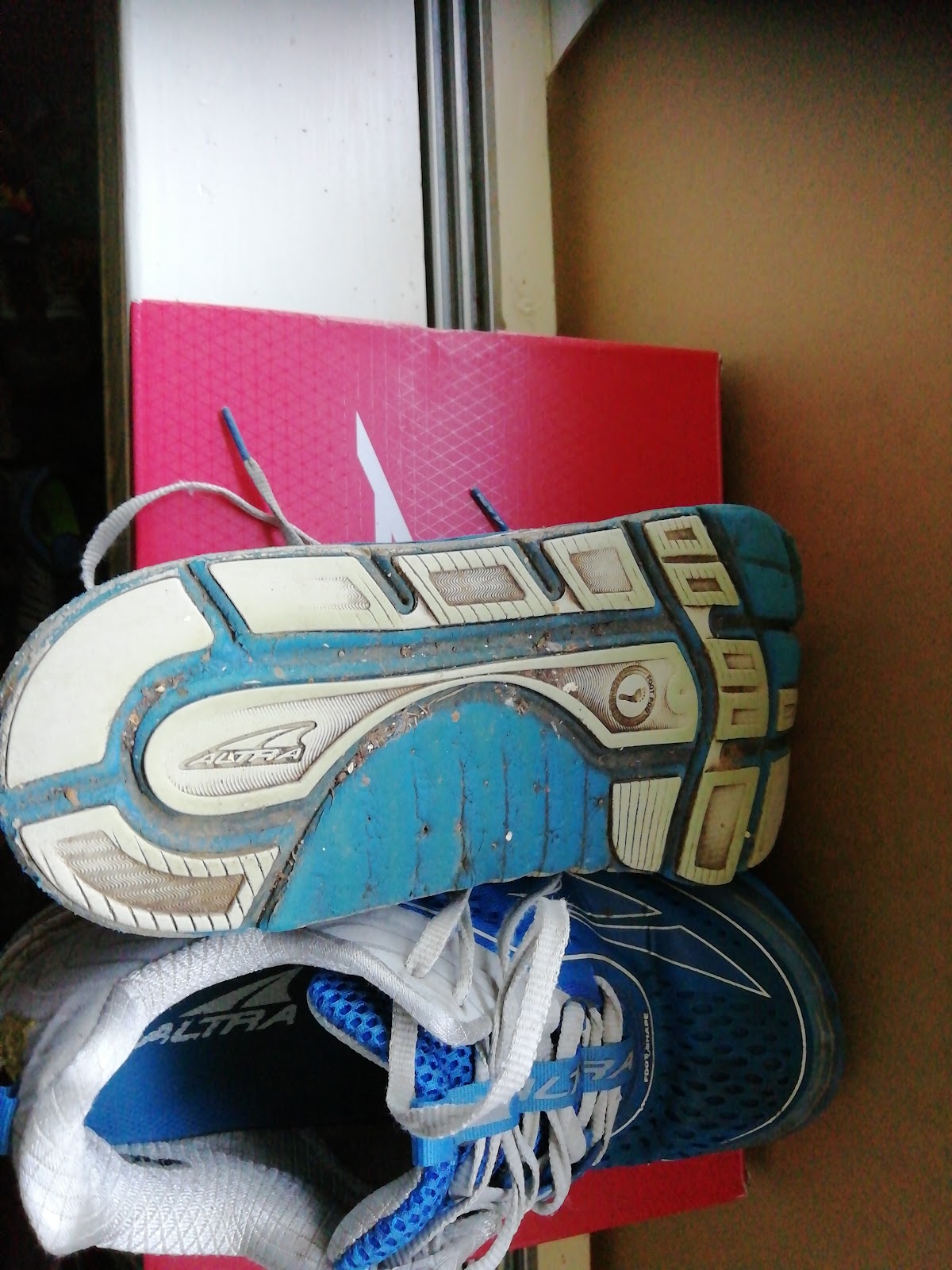
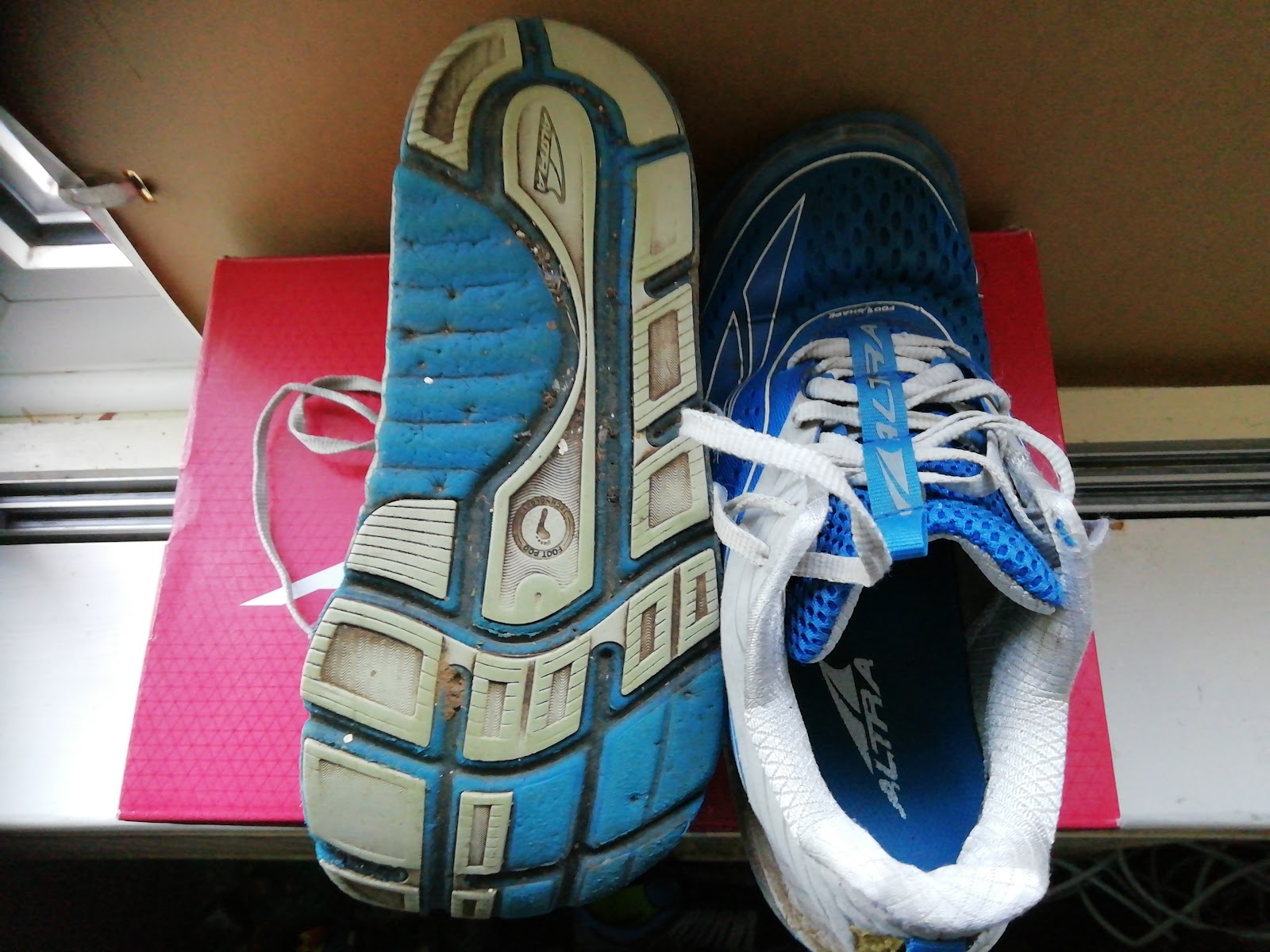
Unfortunately for me, my gait is a supinator so I need a wider forefront outsole to prevent me from rolling my ankles too much.  As you would expect my worn out Altra Torin 3.5 Mesh Running Shoes shows a wear pattern on the outer side of the sole. Having said this I did not experience the rolling of my ankles.  

Pictures below of the wear pattern: 


PICTURE OF WEAR PATTERN 

ZERO-DROP:

Most running shoes feature elevated heels that promote poor form by encouraging high-impact overstriding.  We were born without an elevated heel so why have this in a running shoe?  

The Altra Torin 3.5 Mesh Running Shoe allows you to maintain a natural foot position throughout your run.  In essence, the Zero-Drop platform places the heel and forefront the same distance from the ground. This naturally aligns the feet, back and body and encourages a low-impact landing.  

Well, that's the theory anyway.  In reality I felt the impact on my feet.  I would of liked more cushioning. I also experienced a loud noise when running on the road.  

COMFORT AND DURABILITY:

As mentioned previously, the comfort was less than expected from Torin because I did experience loud noises when running on the road.  This made my toes painful where the proximal phalanges meets the metatarsal bones.  

The durability was consistent with a running shoe - JOGLE was 882 miles so using three pairs each pair lasted roughly 294 miles.  

However, I was alternating each pair after the end of each day to prevent heat spots.  I did not come across any hotspots which can lead to blisters just because I brought three pairs and alternated the pairs of running shoes on different days.

The actual mileage was: 

Pair 1 = 311 miles
Pair 2 = 304 miles 
Pair 3 = 267 miles 

I also experienced a wear pattern on the outer side of the sole, but this was more to the fact that I have a supinator gait. 

When I bought three pairs (January 2019) they were £130 each so they were expensive.  Nowadays, you can nearly get them for half that price in a sale.   

PROS:

  • Leightweight
  • Comfort
  • 'Feel the road'

CONS:

  • Cushioning and responsiveness
  • Value for money 
  • Loud noise when running
  • Zero-Drop 
  • Limited colour choices

Overall rating:

70 out of 100 

Thanks to the Altra Torin 3.5 Mesh Running Shoe I completed JOGLE in 17 days. 

RunRepeat
https://runrepeat.com/altra-torin-35-mesh